before Conrad’s eighteenth birthday
The Dynastic Marriage Plan
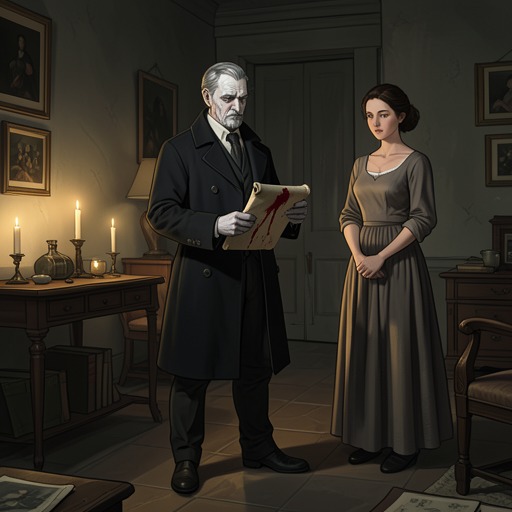
[Manfred](entity:character-recall-character-manfred-95ab7abdb149), Duke of [Otranto](entity:location-recall-location-otranto-a6365351d4df), ruled with his gentle wife [Hippolita](entity:character-recall-character-hippolita-b979cb651765) and their children [Matilda](entity:character-recall-character-matilda-4bba2d801dc7) and [Conrad](entity:character-recall-character-conrad-04192f567972). He favored his sickly son, but neglected Matilda; everyone in the household knew that he had arranged for Conrad to marry [Isabella](entity:character-recall-character-isabella-7de94f8c52ed) of Verona, the daughter of the
on Conrad’s wedding day
Conrad’s Death Beneath the Helmet
At the castle chapel, the wedding guests waited, but [Conrad](entity:character-recall-character-conrad-04192f567972) did not appear. A servant ran back from the courtyard in fear, shouting about the helmet; [Manfred](entity:character-recall-character-manfred-95ab7abdb149) and the others rushed over, only to find the young duke crushed to death by a large steel helmet adorned with black feathers. The supernatural
immediately after Conrad’s death
The Missing Church Helmet
a young farmer noticed that this huge helmet was very similar to the one worn by King Afonso in the nearby church. [Manfred](entity:character-recall-character-manfred-95ab7abdb149) grabbed him and threatened to kill him; when the witness reported that the helmet of the statue had disappeared, Manfred was furious. The crowd accused the farmer, but the
the evening after Conrad’s death
Manfred’s Rejection of Matilda
Hippolyta sent [Matilda](entity:character-recall-character-matilda-4bba2d801dc7) to comfort her father, but [Manfred](entity:character-recall-character-manfred-95ab7abdb149) suddenly refused his daughter at the door of the dormitory, saying he did not want his daughter. Matilda concealed her inner sorrow from her mother; the mother longed to see her husband and grieve with him. Man
later that evening
Manfred’s Proposal to Isabella
[Manfred](entity:character-recall-character-manfred-95ab7abdb149) called Isabel and told her that [Conrad](entity:character-recall-character-conrad-04192f567972)'s death made it unnecessary for her to fulfill the arranged marriage. Then he proposed to take the place of his son as her husband, claiming that his family needed the son, while Isabel deserved a stronger spouse. Isabel recoiled from this proposal and mentioned her
during Manfred’s proposal
The Ancestor’s Animated Portrait
The moonlight revealed the plume of the giant helmet outside the gallery, which was moving. As [Manfred](entity:character-recall-character-manfred-95ab7abdb149) entangled [Isabella](entity:character-recall-character-isabella-7de94f8c52ed), a portrait of his grandfather sighed, his chest rising and falling, took a step out of the frame, and silently indicated for him to follow. Manfred followed the
that night
Isabella’s Flight to Sanctuary
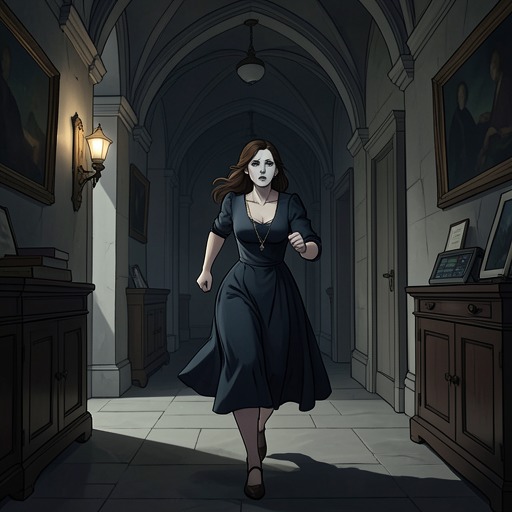
[Isabella](entity:character-recall-character-isabella-7de94f8c52ed) escaped the castle's winding corridors, intending to go through the underground passage to [Saint Nicholas](entity:character-recall-character-saint-nicholas-88e73142d60f) Church, where she could seek shelter. She met the farmer in a dark cellar; although knowing that [Manfred](entity:character-recall-character-manfred-95ab7abdb149) might punish him, he still agreed to help her. They found a hidden hatch, but the
moments after Isabella’s escape
Theodore’s Escape Beneath the Helmet
[Manfred](entity:character-recall-character-manfred-95ab7abdb149) hurried to the place where the trapdoor was heard, but only found the farmer and not [Isabella](entity:character-recall-character-isabella-7de94f8c52ed). The young man explained that the falling helmet pierced the courtyard ground and fell into the cellar, giving him the chance to escape from under the helmet. Manfred questioned him about the trapdoor
later that night
The Giant’s Armored Leg
The people reported that they searched for [Isabella](entity:character-recall-character-isabella-7de94f8c52ed) and saw a huge armored boot and leg lying on the floor of a room. They heard the sound of armor clinking and the door slamming shut, then fled, unable to see what it was
before dawn
Manfred’s Renewed Pursuit
[Manfred](entity:character-recall-character-manfred-95ab7abdb149) searches [Hippolita](entity:character-recall-character-hippolita-b979cb651765)'s chamber for [Isabella](entity:character-recall-character-isabella-7de94f8c52ed); Hippolita and [Matilda](entity:character-recall-character-matilda-4bba2d801dc7) cannot say where she is, so he suspects them. He demands Hippolita's priest to come, then leaves, leaving the terrified mother and daughter facing his threats and odd behavior
before dawn on the following morning
Matilda and Bianca Discuss the Stranger
[Matilda](entity:character-recall-character-matilda-4bba2d801dc7) could not sleep. She learned from [Bianca](entity:character-recall-character-bianca-579dc0b65e0a) that [Isabella](entity:character-recall-character-isabella-7de94f8c52ed) had gone missing, and heard Bianca describe the servant's confused account of the giant armored limb. They talked about Matilda's future: Bianca guessed that her father would arrange a prestigious marriage for her, but Matilda felt
before dawn
Matilda Speaks with Theodore
A voice came from the room below the window of [Matilda](entity:character-recall-character-matilda-4bba2d801dc7), answering her call. The stranger spoke of his sufferings with sincere humility; [Bianca](entity:character-recall-character-bianca-579dc0b65e0a) guessed he was the farmer who had helped [Isabella](entity:character-recall-character-isabella-7de94f8c52ed) escape, and perhaps had fallen in love with her. Matilda scolded Bianca for her
at dawn
Isabella Reaches the Church
A servant reported that [Isabella](entity:character-recall-character-isabella-7de94f8c52ed) had come to the altar of [Saint Nicholas](entity:character-recall-character-saint-nicholas-88e73142d60f) Church, and [Jerome](entity:character-recall-character-jerome-9396baf9647c) had also come to negotiate with [Manfred](entity:character-recall-character-manfred-95ab7abdb149). The monk insisted that Manfred and [Hippolita](entity:character-recall-character-hippolita-b979cb651765) listen to him, and then relayed Isabella's request: she wished to remain under the protection of the altar
that morning
Jerome Rejects Manfred’s Bargain
I was in the lower district, where [Manfred](entity:character-recall-character-manfred-95ab7abdb149) revealed that he wanted [Jerome](entity:character-recall-character-jerome-9396baf9647c) to bring back [Isabella](entity:character-recall-character-isabella-7de94f8c52ed) and persuade Hypolita to accept divorce and enter a convent. He presented this plan as a necessary action to save the subjects and preserve the family, and he promised the monks wealth and power
that morning
Theodore Faces Execution
[Manfred](entity:character-recall-character-manfred-95ab7abdb149) questioned the farmer again, accusing him of being [Isabella](entity:character-recall-character-isabella-7de94f8c52ed)'s lover and pressing him for his identity. The young man called himself Theodor, saying that he had never met her before the night when he was helping the princess escape; he would not yield to threats and would not admit the false
immediately before the execution
Jerome Recognizes His Son
[Jerome](entity:character-recall-character-jerome-9396baf9647c) rushes to hear Theodor's confession and pleads with [Manfred](entity:character-recall-character-manfred-95ab7abdb149) to spare an innocent man. As Theodor is about to be executed, his shirt slips from his shoulder, revealing a birthmark. Jerome recognizes it as the mark that proves this young farmer is indeed his long-lost son
shortly after Theodore’s recognition
The Herald’s Challenge
The horn sounded at the castle gate, the feathers on the knight's helmet seemed to be moved by an invisible person, slightly lowered. The messenger announced that the knight sent by Frederick demanded the return of [Isabella](entity:character-recall-character-isabella-7de94f8c52ed) and demanded that [Manfred](entity:character-recall-character-manfred-95ab7abdb149) hand over [Otranto](entity:location-recall-location-otranto-a6365351d4df), claiming that Frederick was the closest to
later that morning
Frederic’s Procession Arrives
The grand escort of Frederick entered the castle, the troops carrying a banner combining the coats of arms of [Vicenza](entity:location-recall-location-c2f5a06d00c2) and [Otranto](entity:location-recall-location-otranto-a6365351d4df). His chief knight was fully armed, and the crowd also carried a huge sword
during Frederic’s first audience
Manfred Offers a Marriage Alliance
The silent knights refused to remove their helmets and visors. [Manfred](entity:character-recall-character-manfred-95ab7abdb149) explained his hereditary claim to [Otranto](entity:location-recall-location-otranto-a6365351d4df) and admitted that Frederick also had a competitive right to inheritance. He said that Isabel's recovery of freedom was due to [Conrad](entity:character-recall-character-conrad-04192f567972)'s death, and he pretended to be so grief-stricken that
later that morning
Isabella’s Second Flight
[Jerome](entity:character-recall-character-jerome-9396baf9647c) learned from a fellow monk that [Isabella](entity:character-recall-character-isabella-7de94f8c52ed) left the convent because she was told that Hypolita had died. The monk had once advised her to don a nun's habit; Jerome realized that this deception had put her in danger, so he searched the convent and the church, but could not
while Manfred pursues Isabella
Matilda Releases Theodore
The servants of [Manfred](entity:character-recall-character-manfred-95ab7abdb149) left the castle, searching for [Isabella](entity:character-recall-character-isabella-7de94f8c52ed), and by accident removed the guard of Theodor. [Matilda](entity:character-recall-character-matilda-4bba2d801dc7) climbed the Black Tower, opened his prison door, and urged him to escape before his father returned
later that day
Theodore Finds Isabella in the Caves
[Theodore](entity:character-recall-character-theodore-004f188c5d42) visited the monastery and learned that [Isabella](entity:character-recall-character-isabella-7de94f8c52ed) had gone missing, so he went to the cave east of [Otranto](entity:location-recall-location-otranto-a6365351d4df) to search for her. He heard someone running desperately in the passage and then found Isabella. She begged him not to send her back to [Manfred](entity:character-recall-character-manfred-95ab7abdb149). Theodore promised to protect
during the search in the caves
Theodore Wounds Frederic
At the entrance of the cave, Theodor blocked an armed knight coming to look for [Isabella](entity:character-recall-character-isabella-7de94f8c52ed). He mistakenly thought the stranger was a follower of [Manfred](entity:character-recall-character-manfred-95ab7abdb149) and fought him fiercely, stabbing him in several places, then took his weapons. The injured knight revealed himself to be Frederick, Isabella's father
after Frederic returns to the castle
Frederic Reveals the Sword Prophecy
Hippolyta and [Matilda](entity:character-recall-character-matilda-4bba2d801dc7) received the wounded Frederick, whose injuries were not as severe as people feared. He told how he met a dying hermit in the woods near Joppa. The hermit guided him to dig under a tree, where he found the huge sword now lying in the
during Frederic’s return
Manfred Sees Alfonso in Theodore
[Manfred](entity:character-recall-character-manfred-95ab7abdb149) entered the room and was horrified to see Theodor, for Theodor's face and armor made him look like a figure from the portrait of [Alfonso](entity:character-recall-character-alfonso-00a61d22dd80). He accused [Jerome](entity:character-recall-character-jerome-9396baf9647c) of arranging Theodor's escape and bringing him into the castle to humiliate himself
the following morning
Hippolita Proposes an Alliance
[Matilda](entity:character-recall-character-matilda-4bba2d801dc7) and [Isabella](entity:character-recall-character-isabella-7de94f8c52ed) confessed that both had feelings for Theodor, and then agreed not to let jealousy destroy their friendship. [Hippolita](entity:character-recall-character-hippolita-b979cb651765) entered and explained that she had proposed that Matilda marry Frederick to reconcile the two families and prevent the downfall of Orsino. Matilda was horrified by this
later that morning
Jerome Opposes the Divorce
Hippolyta visits [Jerome](entity:character-recall-character-jerome-9396baf9647c), asking if she can agree to dissolve the marriage. The monk strongly advises her to refuse, warning that [Manfred](entity:character-recall-character-manfred-95ab7abdb149)'s plan is guilty, and supernatural omens threaten the entire family
immediately after the statue bleeds
Manfred Banishes Jerome
Hippolyta said she would submit the divorce to the church's decision. But [Manfred](entity:character-recall-character-manfred-95ab7abdb149) ordered her to return to the castle and expelled [Jerome](entity:character-recall-character-jerome-9396baf9647c) and his son from his territory. He still intended to seize [Isabella](entity:character-recall-character-isabella-7de94f8c52ed) and let Orsino continue to be ruled by his family
that evening
Bianca Reports the Giant Hand
[Manfred](entity:character-recall-character-manfred-95ab7abdb149) asked [Bianca](entity:character-recall-character-bianca-579dc0b65e0a) about her feelings for [Isabella](entity:character-recall-character-isabella-7de94f8c52ed) and her relationship with Theodor; he bribed her with jewels and pressed her for secrets. Bianca's evasive answers only deepened his suspicions, making him think she was hiding more things
later that evening
Frederic Sees the Hermit’s Ghost
After the banquet, Frederick entered Hippolyta's dimly lit prayer room, thinking she was there. A skeleton-like figure, wearing a hermit's hood, turned to him, mentioning the woods near Joppa, the buried great sword, and a command from heaven. The ghost commanded Frederick
immediately after Alfonso’s apparition
Manfred Confesses the Usurpation
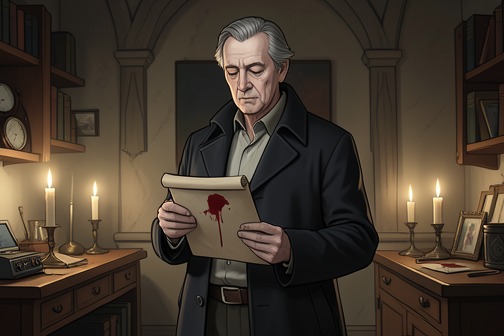
[Hippolita](entity:character-recall-character-hippolita-b979cb651765) tells [Manfred](entity:character-recall-character-manfred-95ab7abdb149) that the family’s greatness has proved vain and that [Theodore](entity:character-recall-character-theodore-004f188c5d42) is the true prince. Manfred accepts the judgment and confesses that his grandfather [Ricardo](entity:character-recall-character-ricardo-0e9788e94628) poisoned [Alfonso](entity:character-recall-character-alfonso-00a61d22dd80), forged a will, and took the principality for himself.
He recounts that Ricardo later vowed to build a church and two convents, after which [Saint Nicholas](entity:character-recall-character-saint-nicholas-88e73142d60f) promised that Ricardo’s descendants would reign only until the rightful heir grew too large to inhabit the castle. Manfred recognizes his losses as the price of the original usurpation and relinquishes [Otranto](entity:location-recall-location-otranto-a6365351d4df).
during Manfred’s confession
Jerome Reveals Alfonso’s Marriage
[Jerome](entity:character-recall-character-jerome-9396baf9647c) explains that [Alfonso](entity:character-recall-character-alfonso-00a61d22dd80) was driven to [Sicily](entity:location-recall-location-sicily-8d99f798a76e) by a storm while sailing for the [Holy Land](entity:location-recall-location-holy-land-0607738951e2). There he married [Victoria](entity:character-recall-character-victoria-fef24d0cf051) in secret before continuing on his religious expedition, intending to acknowledge her publicly upon his return.
Victoria bore a daughter after Alfonso’s reported death, and that daughter later became Jerome’s wife and [Theodore](entity:character-recall-character-theodore-004f188c5d42)’s mother. The revelation establishes Theodore’s blood descent from Alfonso and completes the chain that makes him [Otranto](entity:location-recall-location-otranto-a6365351d4df)’s rightful heir.
the morning after the final catastrophe
Manfred and Hippolita Enter Convents
[Manfred](entity:character-recall-character-manfred-95ab7abdb149) signs his abdication, and he and [Hippolita](entity:character-recall-character-hippolita-b979cb651765) take religious vows in neighboring convents. Their retirement ends the rule of [Ricardo](entity:character-recall-character-ricardo-0e9788e94628)’s line and leaves [Theodore](entity:character-recall-character-theodore-004f188c5d42) in possession of the principality.
[Frederic](entity:character-recall-character-frederic-249a9453d885) offers [Isabella](entity:character-recall-character-isabella-7de94f8c52ed) to Theodore, and Hippolita supports the match. Theodore’s grief for [Matilda](entity:character-recall-character-matilda-4bba2d801dc7) delays his acceptance, but he eventually finds consolation in marrying Isabella, whose companionship allows him to remember the woman he loved.